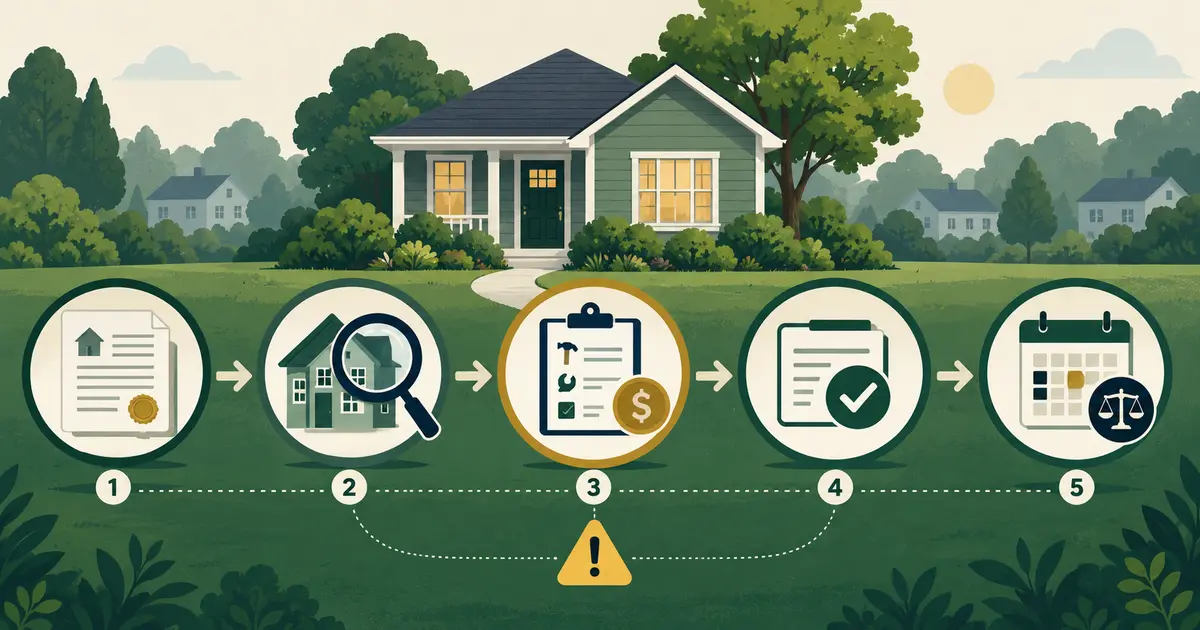
Pre-foreclosure is a homeowner’s legal and financial process before it is an investor opportunity.
A home described as “pre-foreclosure” is generally still owned by the homeowner. The mortgage may be delinquent and the servicer may be evaluating options to keep or sell the home. A buyer needs to verify ownership, foreclosure status, liens, lender involvement, property condition and the seller’s actual authority to close. The Saving and Investing guide helps place a property purchase within your broader money plan.
Pre-foreclosure, short sale and foreclosure are different
| Situation | Who owns the home? | What a buyer must verify |
|---|---|---|
| Mortgage delinquency / pre-foreclosure | Usually the homeowner | Whether foreclosure has formally started, sale deadlines, title, payoff, seller authority and any loss-mitigation process. |
| Short sale | The homeowner until closing | Whether one or more lienholders must approve a sale for less than the debt owed and what approval conditions apply. |
| Foreclosure auction | Ownership changes according to the foreclosure process and applicable law | Auction rules, title/lien priority, cash requirements, occupancy and redemption rules where applicable. |
| REO / bank-owned | The lender or later owner after foreclosure | Seller contract, as-is terms, inspection, financing and repair risk. |
For post-foreclosure purchases, use the separate Buying a Foreclosed Home guide.
What a short sale changes
HUD describes an FHA pre-foreclosure sale, also called a short sale, as a sale in which the proceeds are less than the amount owed and the lienholders agree to release their liens under the applicable program. Other loan types use their own requirements.
For a buyer, the important point is that a signed contract with the homeowner may not be enough when a lender or other lienholder must also approve the payoff. Timelines can be longer and approval may contain conditions.
1. Verify the actual owner and foreclosure status
- Confirm the current owner in public property records.
- Ask the seller or authorized agent what foreclosure notices or sale dates exist.
- Use a title company or attorney, as customary locally, to review recorded liens and title.
- Do not assume a third-party “pre-foreclosure” website has current or complete information.
Foreclosure timelines vary by state. The CFPB recommends homeowners check local court or legal-services resources for local procedures. A buyer should use the same caution before assuming a listing deadline is final.
2. Do not interfere with the homeowner’s loss-mitigation options
A homeowner who is behind on payments may still be working with the servicer on repayment, modification, forbearance, short sale or another loss-mitigation option. CFPB rules provide federal procedural protections at different points in the process, and FHA has its own loss-mitigation and home-disposition programs.
A buyer does not need to advise the homeowner which option to choose. Keep the purchase offer clear and let the homeowner use a HUD-approved housing counselor, attorney, tax professional or other adviser if they want one.
3. Make a written offer that can be independently reviewed
Price and deposit
State the purchase price, earnest money, financing and who holds funds.
Contingencies
Identify inspection, financing, appraisal, title and required lender-approval conditions.
Closing timeline
Use dates that account for title work, financing and any lienholder review rather than creating artificial urgency.
Seller’s advisers
Do not require the seller to use someone controlled by the buyer for legal, housing-counseling or tax advice.
4. Inspect and underwrite the property like any other purchase
Financial distress does not tell you the condition of the roof, plumbing, foundation, electrical system or HVAC. Use a professional inspection when permitted and obtain specialist estimates for major defects.
Build the all-in cost from purchase price, financing, title/closing costs, repairs, insurance, taxes, association costs, utilities and cash needed after closing. A seller’s financial pressure is not a substitute for property due diligence.
5. Be cautious with “subject-to” and mortgage-takeover pitches
Some investors promote transactions in which title transfers while an existing mortgage remains in the seller’s name. These structures can involve due-on-sale clauses, insurance, servicing, tax, title, disclosure and state-law issues. They can also leave the seller exposed to a loan that still appears in the seller’s name.
MoneyBucket does not provide a template for these transactions. If a deal depends on keeping an existing loan in place after a transfer, use qualified local legal, title, insurance and tax professionals before anyone signs.
6. Watch for distress-sale and foreclosure-relief scams
HUD and the CFPB warn homeowners about companies that charge high upfront fees, promise to stop foreclosure, ask owners to transfer title, or tell them to stop communicating with their servicer. A legitimate buyer should not imitate those tactics.
- Do not claim you can stop a foreclosure unless you have the legal authority and facts to support that statement.
- Do not tell a homeowner to ignore the mortgage servicer or a HUD-approved housing counselor.
- Do not hide the fact that you intend to profit from the transaction.
- Do not use blank documents, misleading deeds or oral promises that contradict the written contract.
- Do not require secrecy from the homeowner’s lawyer, counselor, family or adviser.
Buyer due-diligence checklist
- Current owner verified
- Foreclosure status and known deadlines checked
- Title search ordered
- All lienholders identified
- Short-sale or other lender approval requirement confirmed
- Inspection and repair estimates completed
- Financing matched to current property condition
- Insurance quote obtained
- Occupancy and lease status verified
- Comparable sales reviewed
- Written contract reviewed under local requirements
- Seller free to obtain independent advice
Frequently asked questions
Can I buy a house before it is foreclosed?
Potentially, if the homeowner still has authority to sell and the transaction can satisfy or obtain approval from the parties whose liens must be released. The exact process depends on the loan, title and local law.
Is every pre-foreclosure a short sale?
No. A homeowner can be delinquent while still having enough equity to sell and pay all liens. A short sale specifically involves sale proceeds that are insufficient to pay what is owed and requires applicable lienholder approval.
Is a pre-foreclosure automatically a bargain?
No. The property may have substantial equity, competing buyers, repair problems or liens. Analyze the all-in transaction rather than assuming distress equals a discount.
Should I contact homeowners from foreclosure lists?
Marketing and solicitation rules vary by location and profession. If you contact an owner, identify yourself and your purpose accurately, do not misrepresent government or lender affiliation, and do not pressure someone to give up legal or loss-mitigation options.
Primary sources
MoneyBucket provides general educational information, not legal, tax, real-estate or investment advice. Foreclosure procedures, solicitation rules, lien rights and contract requirements vary by state and transaction.