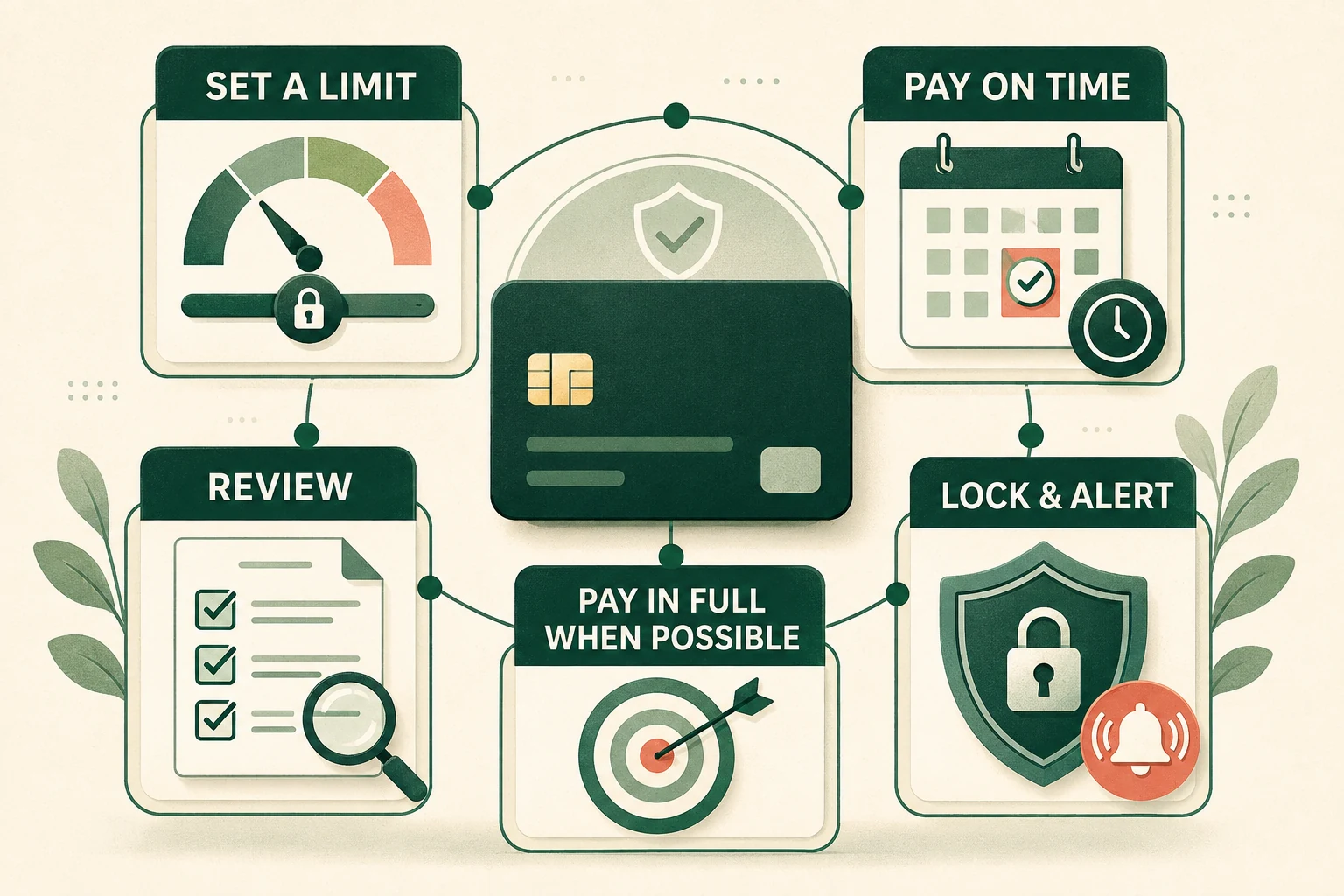
Credit cards can help with purchases and credit history, but interest and fees can make carried balances costly. Set a spending limit, pay on time, review statements, keep balances low, and pay the full statement balance when your budget allows.
The Consumer Financial Protection Bureau’s credit guide recommends on-time payments, staying away from credit limits, limiting new applications, and paying card balances in full when possible.
Creating a Budget for Credit Card Spending
Before using a credit card, it is important to create a budget to determine how much you can afford to spend each month. This will help you avoid overspending and accruing debt. To create a budget, add up your monthly income and subtract your fixed expenses, such as rent, utilities, and groceries. The remaining amount is what you can allocate to credit card spending. Be sure to also factor in any upcoming expenses, such as a vacation or holiday shopping, to ensure that you do not overspend.
Paying Your Balance in Full Each Month
One of the most important rules for using a credit card responsibly is to pay your balance in full each month. This will help you avoid accruing interest and fees on your balance, which can quickly add up and lead to debt. If you cannot afford to pay your balance in full each month, aim to pay as much as you can to reduce the amount of interest that will accrue.
Avoiding High-Interest Debt
Another way to use a credit card responsibly is to avoid high-interest debt. High-interest debt is debt that accrues interest at a high rate, such as credit card debt. To avoid high-interest debt, aim to pay your balance in full each month and avoid using your credit card to make purchases that you cannot afford to pay off. If you do carry a balance, consider transferring the balance to a credit card with a lower interest rate.
Protecting Against Fraud and Theft
Finally, it is important to protect against fraud and theft when using a credit card. To protect against fraud, monitor your credit card statements regularly for any unauthorized charges. If you notice any unauthorized charges, contact your credit card issuer immediately to report the fraud. If you need to organize the evidence, draft a clear message and plan the next escalation step, use Get My Money Back. You can also protect against theft by keeping your credit card in a secure place and never sharing your credit card information with anyone.
In conclusion, using a credit card responsibly requires creating a budget for credit card spending, paying your balance in full each month, avoiding high-interest debt, and protecting against fraud and theft. By following these guidelines, you can use a credit card as a tool for convenience and building credit, without the risk of accruing debt and financial trouble.