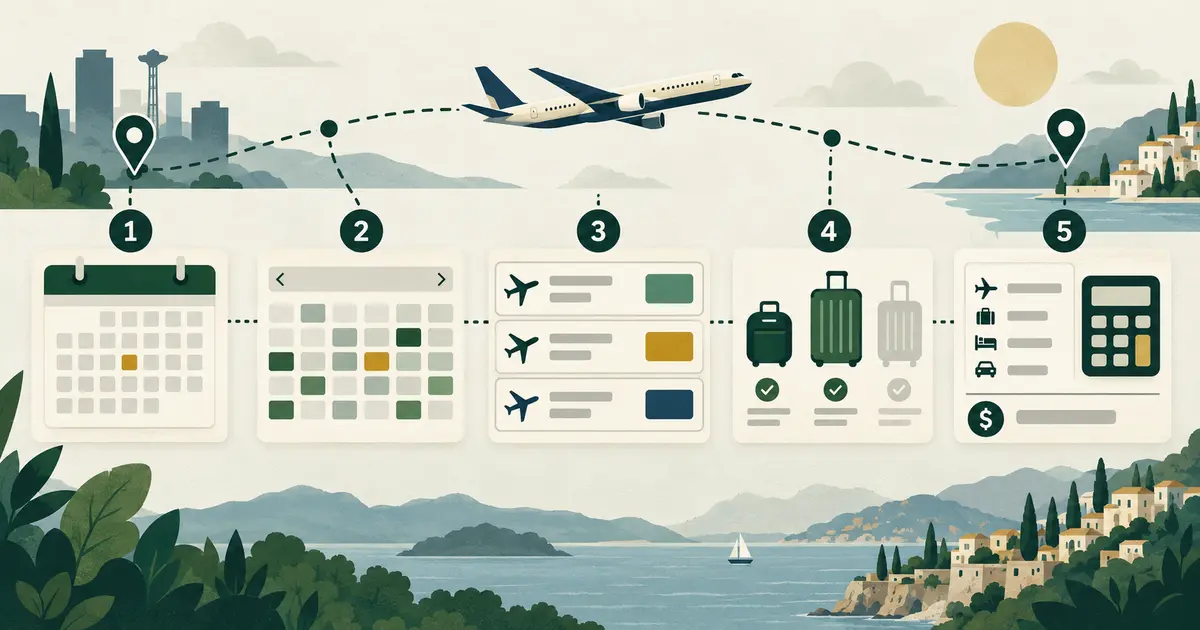
Cheap airfare is rarely about one secret booking day or a browser trick. The better approach is to compare flexible dates, track real fare changes, include fees in the total price, and know your refund rights before you pay. These 10 tactics can help you find cheaper flights without relying on risky ticketing tricks. The Save Money guide covers other ways to reduce spending beyond travel.
1. Compare Flexible Travel Dates
Changing the departure or return date by even a day can change the fare. Google Flights provides a Dates tool and Price graph so you can compare prices across nearby dates rather than guessing which weekday is always cheapest. Google notes that prices vary by route and date, so there is no universal cheapest day that works for every trip.
Source: Google Travel Help, How to find the best fares with Google Flights
2. Track Prices Before You Book
If your trip is not urgent, turn on fare tracking for the route. Google Flights can send email updates when tracked prices change materially and can also flag when a fare is likely to rise. This replaces the old habit of repeatedly checking the same itinerary and hoping to catch a drop.
Source: Google Travel Help, Track flights and prices
3. Check Nearby Airports
A second airport can sometimes cut the ticket price, especially in metro areas served by several airports. Compare the airfare against the added cost of parking, rideshare, rental cars, tolls, or extra travel time. A $70 cheaper ticket is not a win if getting to the alternate airport costs $90 more.
4. Compare the Total Fare, Not Just the Headline Price
The cheapest fare on the first screen may not be the cheapest trip. Check carry-on fees, checked-bag fees, seat-selection charges, and other optional costs before choosing a flight. Google Flights has a Bags filter that can include estimated baggage costs in the comparison, and the U.S. Department of Transportation requires airlines to make baggage-fee information available to consumers.
Source: Google Travel Help, Filter flight prices by bag fees | U.S. Department of Transportation, Buying a Ticket
5. Compare the Best and Cheapest Results Carefully
Google Flights separates many searches into Best and Cheapest results. The Cheapest tab may include lower fares with trade-offs such as self-transfers, separate tickets, or airport changes. Read the itinerary closely. A slightly higher fare can be worth it when it reduces missed-connection risk or avoids moving bags between tickets.
6. Price the Trip as a Round Trip and as Two One-Way Tickets
Do not assume a round trip is always cheaper. Search the same itinerary as two one-way tickets, including different airlines for the outbound and return. Compare the total fare, baggage rules, schedule, and what happens if one flight changes. Separate tickets can save money, but they can also give you fewer protections when plans break.
7. Use the 24-Hour Booking Rule When It Applies
For airline tickets bought at least seven days before departure, U.S. rules require airlines to offer either a 24-hour hold at the quoted fare or 24-hour cancellation with a full refund. Airlines do not have to offer both options. The federal 24-hour requirement does not apply in the same way to tickets purchased through online travel agencies or travel agents, so check the seller’s policy before paying.
Source: U.S. Department of Transportation, Refunds
8. Know When a Cancellation or Major Schedule Change Can Trigger a Refund
If an airline cancels a flight or makes a qualifying major change and you choose not to accept alternate transportation or travel credit, federal rules may entitle you to a refund. Knowing that before you accept a voucher can protect cash you would rather keep.
Source: U.S. Department of Transportation, Automatic Refund Rule
9. Treat Points and Airline Cards Like Math, Not Free Money
Frequent-flyer miles or a card benefit can lower the cash cost of a trip, but compare the value you receive against annual fees, taxes, redemption restrictions, and any interest you might pay. Carrying credit-card debt for a flight can erase the value of a sign-up bonus quickly. If you use a travel card, the strongest savings usually come when you pay the statement balance in full and would have made the purchase anyway.
For more on using cards without adding expensive debt, see the MoneyBucket credit card guide.
10. Skip Hidden-City Ticketing and Other Contract-Breaking Tricks
Hidden-city ticketing means booking a trip beyond your real destination and intentionally skipping a later segment. It can look cheaper, but major airlines may prohibit it in their contracts of carriage. Possible consequences can include cancellation of unused flight segments, loss of remaining ticket value, boarding problems, or a demand for a higher fare. That is too much risk for a routine savings tactic.
Example source: Delta Contract of Carriage, prohibited ticketing practices
Cheap Flight Booking Checklist
- Search flexible dates.
- Turn on price tracking if you have time to wait.
- Compare nearby airports.
- Add baggage, seat, and ground-transport costs.
- Compare round-trip pricing with two one-way tickets.
- Check whether the booking is direct with the airline or through a third party.
- Read cancellation, change, and refund rules before paying.
- Avoid ticketing tactics that violate an airline’s contract.
What Is the Best Way to Find Cheap Flights?
The most reliable method is comparison, not folklore. Search several reasonable date combinations, watch the route if your schedule allows, compare the full trip cost, and book when the fare fits your budget and the ticket rules fit your plans. A low fare that creates extra fees, risky connections, or weak cancellation options can cost more than a slightly higher ticket.
For more ways to lower recurring and everyday costs, visit How to Save Money.