The MoneyBucket Pay & Work guide connects this comparison with related help for pay stubs, deductions, and payroll errors. Paycheck Troubleshooting
Why Did My Take-Home Pay Change?
If your deposit changed, compare the new pay stub with the last normal one line by line. Start with the pay period, hours, rate, and gross pay. Then check pretax deductions, taxes, post-tax deductions, reimbursements, and net pay. The first changed line usually reveals the cause.
Why is my paycheck different this pay period?
Your take-home pay can change when your hours, rate, overtime, bonus, pay period, benefit elections, retirement contribution, tax withholding, garnishment, reimbursement, or payroll correction changes. A smaller deposit does not automatically mean payroll made an error. Compare the current and previous stubs using the same sequence so you can identify the exact line responsible.
Why Did My Take-Home Pay Change? 7 Checks in 53 Seconds
Compare two pay stubs and find the first earnings, tax, deduction, adjustment, or net-pay line that changed.
Read the video transcript
- Compare the last normal pay stub with the current one. Find the first line that changed.
- Confirm comparable work dates and the same number of scheduled days.
- Check regular hours, rate, overtime, bonus, commission, and shift pay separately.
- If gross pay changed, trace the difference to an earnings line.
- Compare benefits, retirement, and each taxable wage amount.
- Review federal, Social Security, Medicare, state, and local tax lines.
- Check dues, loans, wage orders, purchases, reimbursements, and payroll corrections.
- Reconcile the deposit. $2,100 gross minus $250 pretax, $390 in taxes, and $35 post-tax equals $1,425 net pay.
Common Reasons Take-Home Pay Changes
Hours or earnings changed
Regular hours, unpaid time, overtime, shift differentials, commissions, tips, bonuses, retroactive pay, and rate changes all affect gross pay.
The pay period is different
A cutoff date, extra payday, partial first check, holiday schedule, or correction can make two deposits cover different amounts of work.
Benefits or savings changed
A new plan year, coverage tier, retirement percentage, HSA or FSA election, catch-up amount, or missed deduction can alter the total taken out.
Tax withholding changed
Different taxable wages, a new W-4, updated tax tables, a bonus, extra withholding, or a payroll correction can change income-tax withholding.
A deduction started or stopped
Union dues, a loan, wage order, employee purchase, charitable gift, parking, or another authorized line may appear, end, or change.
A reimbursement or adjustment moved
Mileage, expenses, retro pay, benefit refunds, prior overpayments, and payroll corrections can appear separately from ordinary wages.
Compare Two Paychecks in Nine Steps
- Confirm the pay period and pay date. Make sure both checks cover comparable periods.
- Compare regular hours. Match each shift or timecard entry to the hours paid.
- Compare the pay rate. Check regular, overtime, differential, commission, and bonus rates separately.
- Compare gross pay. If it changed, trace the difference back to an earnings line.
- Compare pretax deductions. Review benefits, retirement, and spending-account contributions.
- Compare taxable wages. Federal income-tax, Social Security, Medicare, state, and local wage bases may differ.
- Compare every tax line. Look at the current amount and year-to-date total.
- Compare post-tax deductions and adjustments. Include orders, dues, loans, purchases, reimbursements, and corrections.
- Reconcile net pay. Confirm the listed earnings, taxes, deductions, and additions produce the stated deposit.
Worked Example: Higher Gross Pay, Smaller Deposit
| Pay-stub line | Previous check | Current check | Change |
|---|---|---|---|
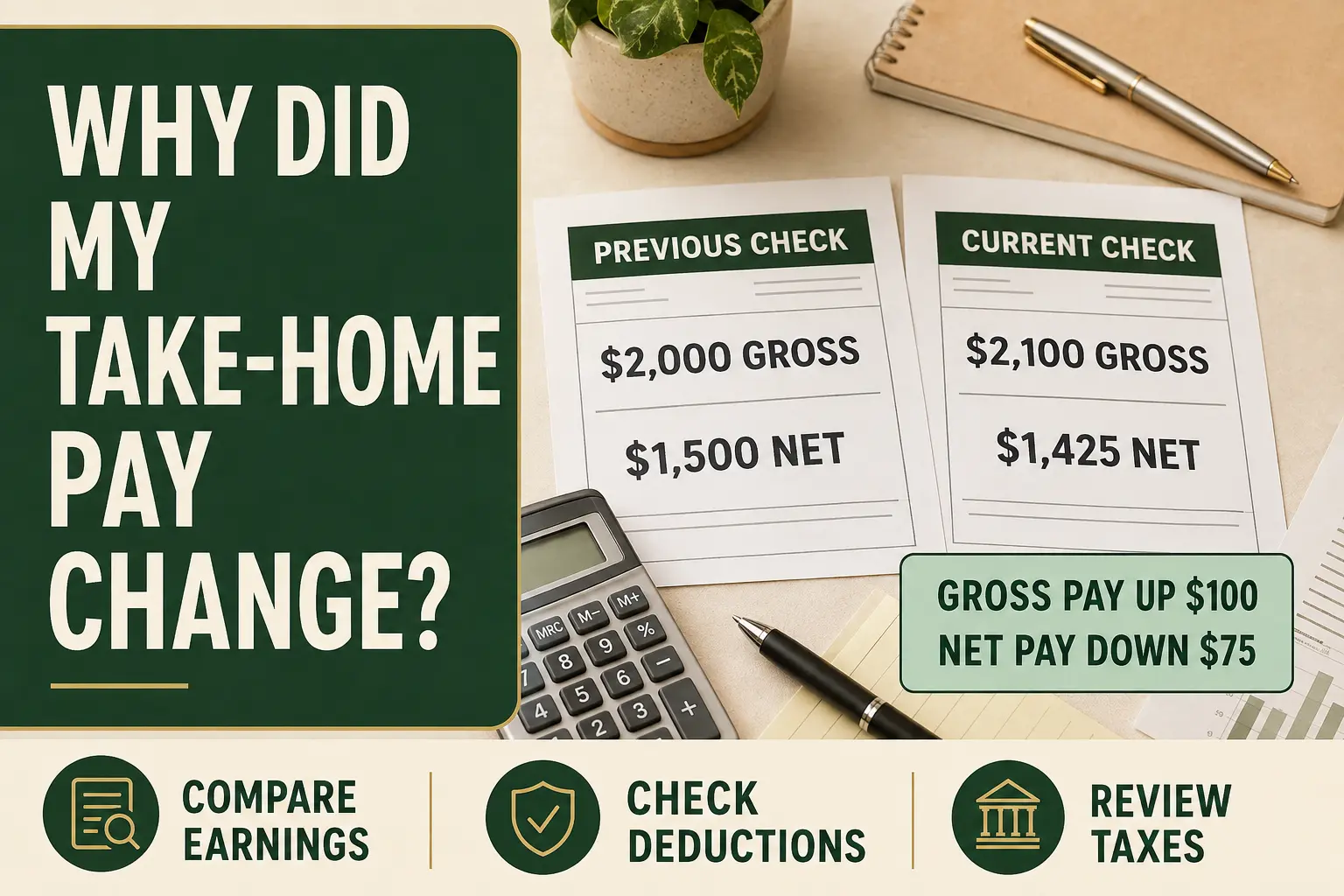
| Gross pay | $2,000 | $2,100 | +$100 |
| Pretax deductions | $200 | $250 | −$50 |
| Taxes | $280 | $390 | −$110 |
| Post-tax deductions | $20 | $35 | −$15 |
| Net pay | $1,500 | $1,425 | −$75 |
Current check: $2,100 − $250 − $390 − $35 = $1,425 net pay.
Gross pay rose by $100, but deductions and taxes rose by $175. The deposit fell by $75. The next step is to identify why pretax deductions, taxes, and post-tax deductions changed rather than assuming the raise was calculated incorrectly.
Find the line that changed
If you are paid hourly, Paycheck Proof helps you compare recorded hours, base rate, overtime hours, and overtime pay against the pay stub. Taxes, deductions, and net pay need a separate review.
Why Tax Withholding Can Change
Federal income-tax withholding depends on taxable wages, payroll frequency, the Form W-4 on file, and current withholding methods. A bonus or other supplemental wage may also be handled differently from ordinary wages. Social Security and Medicare follow separate rules, so those lines do not necessarily move in the same way as federal income tax.
- Your taxable wages changed because earnings or pretax deductions changed.
- You or payroll entered a new Form W-4.
- An extra withholding amount began or ended.
- A bonus, commission, retroactive payment, or other supplemental wage was included.
- Your payroll frequency or pay-period treatment changed.
- A prior tax error or adjustment was corrected.
Signs the Change May Need a Payroll Review
- Hours, rate, overtime, bonus, or differential does not match your records.
- A benefit deduction does not match your enrollment or coverage tier.
- A deduction appears twice or continues after its stated end date.
- Your W-4 settings in payroll do not match the form you submitted.
- A correction changes net pay without a clear adjustment statement.
- The deposit does not match the net-pay figure on the stub.
- The math on the statement does not reconcile.
Save both pay stubs, the time record, benefit elections, W-4 confirmation, payroll notices, and bank deposit record. State the exact line and dollar difference when contacting payroll. Use the payroll correction message template to send a calm, documented request.
Choose the Right Next Guide
Gross pay looks wrong
Use the paycheck error checklist or check for missing hours on your paycheck.
A deduction changed
Use the paycheck deductions guide to decode the line and compare it with your records.
The stub is confusing
Follow the pay-stub walkthrough from pay period through year-to-date totals.
Overtime looks wrong
Use the overtime paycheck guide to check the calculation.
Take-Home Pay Questions
Why did my take-home pay decrease when I got a raise?
Taxes, percentage-based retirement contributions, benefit changes, or new deductions may have increased by more than gross pay. Compare the old and new stubs line by line and calculate the change in each category.
Why is my paycheck smaller with the same hours?
Your rate, pay period, taxable wages, benefits, tax settings, post-tax deductions, or adjustments may have changed. Start with gross pay. If gross pay is unchanged, the cause is in a tax, deduction, reimbursement, or adjustment line.
Why was more federal tax taken from this paycheck?
Federal withholding can change with taxable wages, payroll frequency, Form W-4 settings, bonuses, commissions, other supplemental pay, or a correction. Compare taxable wages and the W-4 record before judging the amount.
Can a three-paycheck month change my deductions?
Yes. Some employers take certain benefit deductions from every check, while others collect them only from a set number of checks. Review your plan and payroll schedule to see how the extra payday is handled.
Why does my bank deposit differ from net pay?
Check whether net pay was split across accounts, partly sent to a pay card, reduced by an off-cycle reversal, or affected by a bank issue. Ask payroll for the deposit trace if the listed allocations do not explain it.
Should I submit a new W-4?
Consider checking your federal withholding after changes in income, jobs, filing status, dependents, credits, or deductions. Use the current IRS Tax Withholding Estimator before submitting a new form.
Official Sources
This page provides general educational information, not legal, tax, accounting, benefits, or employment advice. Payroll and withholding rules vary by worker, employer, benefits, pay plan, and state.
Related guide: If your salary looks solid but the deposit still feels small, map where a $100,000 salary goes after payroll deductions and core costs.