How to Build a Household Budget That Still Works When the Month Gets Messy
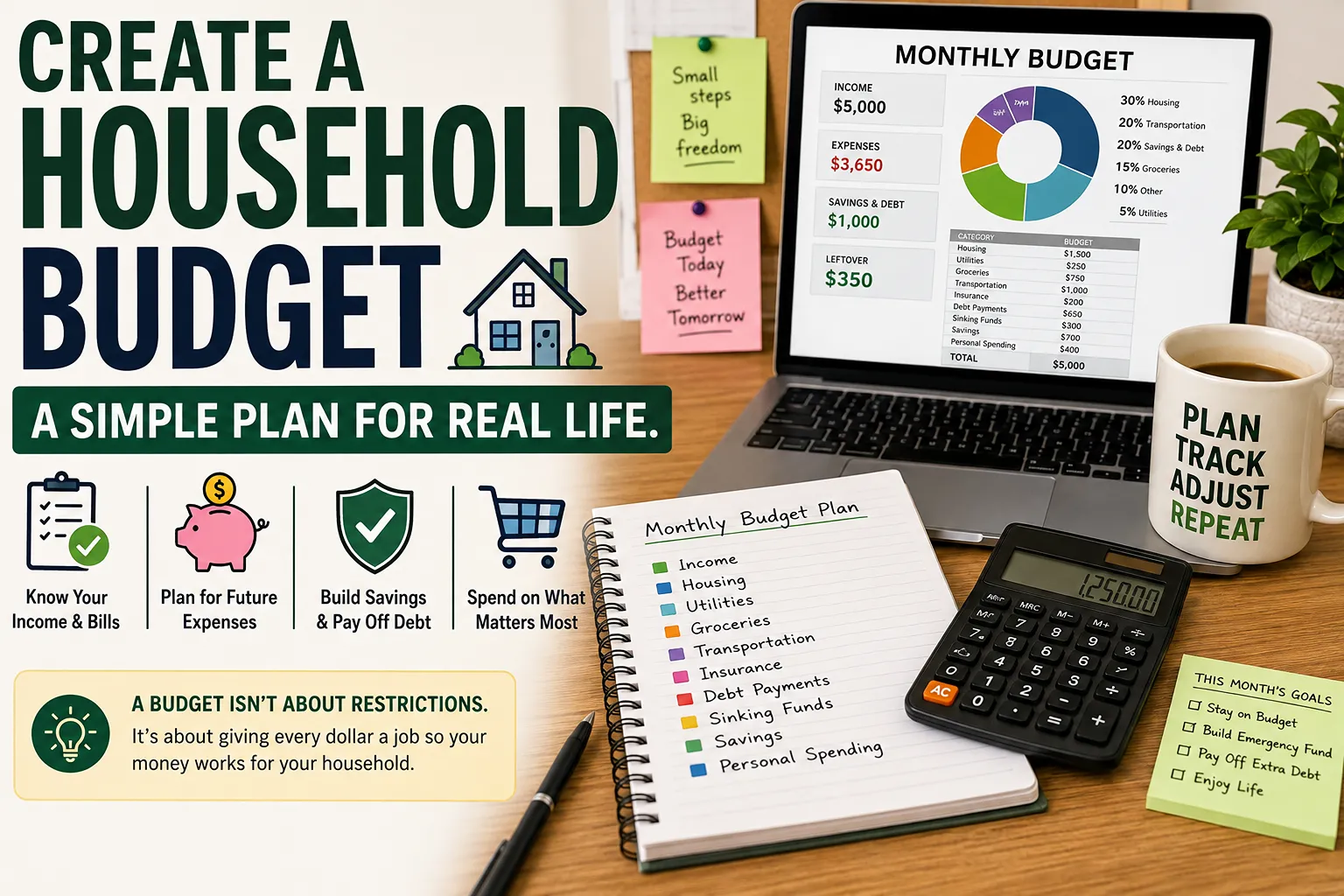
A useful budget is not a spreadsheet that proves you can predict every dollar perfectly. It is a plan for getting from one payday to the next while covering bills, preparing for expenses you know are coming, saving for the future and leaving enough room to live.
The Consumer Financial Protection Bureau’s spending assessment recommends reviewing recent statements, including irregular expenses, and comparing spending with savings goals.
Need a Budget Right Now? Start With These Four Numbers
Forget categories for a moment. Before you build a full household budget, make sure the money already in your account can survive until the next income arrives.
Money Available
What is actually available in checking, cash and savings you are willing to use before the next payday?
Income Coming
How much take-home income should arrive before the next budgeting period ends?
Bills Due
Which rent, mortgage, utility, insurance, loan and other required payments are due before more money arrives?
Life Costs
How much do you need for groceries, fuel, medicine, transportation and other essential spending during the same period?
Your Basic Budget Equation
You now know there is a shortage before the bank account discovers it for you. The next job is deciding what can change.
Step 1: Budget the Money You Can Actually Spend
Start with take-home income, not gross salary.
Your gross pay may look impressive on paper, but your household cannot spend taxes, payroll deductions, insurance premiums or retirement contributions that never reach the checking account.
Include Dependable Income
- Regular take-home pay
- Reliable tips or commissions
- Regular pension or benefit payments
- Dependable side income
- Reliable freelance income
- Other recurring household income
Do Not Require Uncertain Money to Save the Month
- Possible overtime
- Bonuses that are not guaranteed
- Tax refunds
- Gifts
- Occasional sales
- Income you hope will arrive
Do not build essential bills around your best month. Use a conservative income number that your household can reasonably expect, then give higher-income months a separate job.
If you are paid hourly, use Paycheck Proof to compare recorded hours, base rate, overtime hours, and overtime pay against the pay stub before building a budget around the deposit. Review deductions and take-home pay separately.
Step 2: Put Every Expense Into One of Four Buckets
You do not need 47 categories. Start broad enough that you can understand the month without turning budgeting into a second job.
Bills That Usually Have a Due Date
- Rent or mortgage
- Car payment
- Insurance premiums
- Childcare
- Phone and internet
- Minimum debt payments
Necessary Costs That Move Around
- Groceries
- Utilities
- Fuel
- Medicine
- Household supplies
- Pet care
Expenses That Are Predictable but Not Monthly
- Car registration
- Vehicle maintenance
- Holiday spending
- Annual subscriptions
- School costs
- Home repairs and maintenance
Money That Makes the Plan Worth Following
- Emergency savings
- Extra debt payments
- Retirement
- Travel or purchases
- Dining and entertainment
- Personal spending
If groceries have been running around $700, writing $350 into the budget does not instantly cut the grocery bill in half. Start with reality, then decide what can reasonably change.
If you do not know where the money has been going, use How to Track Your Spending first.
Step 3: Stop Letting Predictable Bills Pretend to Be Emergencies
One of the fastest ways to wreck a monthly budget is to forget everything that does not arrive monthly.
Car registration is not an emergency when you know it returns every year. Neither are the holidays, routine maintenance, annual memberships or the insurance bill you have paid for years.
Use a Sinking Fund
A sinking fund sets aside a little money each budgeting period for a known future expense.
$600
6
$100
Instead of finding $600 in one painful month, you give $100 a job during each of the six months before the bill arrives.
A sinking fund prepares for something you know is coming. An emergency fund protects you from expenses and income problems that are much harder to predict.
Step 4: Build the Household Budget in This Order
Write Down Take-Home Income
Use the amount the household can actually spend during the budget period.
Cover Housing and Basic Utilities
Give shelter, electricity, water and other essential household services first claim on the available money.
Cover Food, Medicine and Necessary Transportation
Protect the spending that keeps people fed, healthy and able to reach work, school or necessary care.
Cover Required Insurance and Minimum Debt Payments
Include required obligations before deciding how aggressively to pay extra debt.
Fund Upcoming Nonmonthly Expenses
Give future bills a place in today’s budget instead of forcing a future paycheck to absorb the entire amount.
Choose One or Two Financial Goals
Build emergency savings, pay extra toward debt, save for retirement or fund another priority that matters to the household.
Budget Some Personal Spending
A budget with no room for normal human life can become very difficult to maintain. Give discretionary spending a limit instead of pretending it will never happen.
Leave a Small Buffer When You Can
Prices change. Small forgotten expenses appear. A little breathing room can keep a $12 surprise from forcing the entire budget to be rebuilt.
If Money Runs Out Before Payday, Budget by Paycheck
A monthly budget can say you have enough money while your checking account says otherwise. The problem may be timing.
Start With the Deposit
Write down the exact amount available from this paycheck.
Find Bills Due Next
Cover everything that must be paid before the following paycheck arrives.
Fund Daily Life
Set aside food, fuel, medicine and other essential costs for the same period.
Fund the Future
Use what remains for sinking funds, goals, extra debt payments and personal spending.
If five large bills hit during the first week of the month but your household receives income throughout the month, ask providers whether payment due dates can be moved to spread the cash-flow pressure.
How to Budget When Your Income Changes Every Month
Freelancers, gig workers, commission earners, seasonal workers and households with changing hours need a budget that does not depend on one perfect income number.
Find Your Lower Normal Month
Review several months of income and identify a conservative amount that regularly appears even when business or work hours are slower.
Build Essentials Around That Number
Try to keep required bills and basic living costs from depending on your highest-income months.
Give Extra Income a Job
Higher-income months can refill the income buffer, prepare for taxes, cover future bills, build savings and pay down debt.
Do not treat every dollar deposited by a client or gig platform as spendable household income. Keep tax money separated from ordinary spending and use the MoneyBucket Taxes Guide to understand estimated-tax planning.
What If Your Expenses Are Higher Than Your Income?
A budget cannot make $3,000 of required expenses fit inside $2,500 of income through better color coding.
Work the Gap in This Order
- Protect housing, food, utilities, medicine and transportation needed for work or care.
- Pause or reduce flexible spending.
- Review every recurring subscription and membership.
- Ask providers about lower plans, hardship programs or due-date changes.
- Look at large expenses such as housing, vehicles, childcare, insurance and debt.
- Work on the income side when spending cuts cannot close the gap.
If the monthly shortage is $800, eliminating a $12 subscription does not solve it. The answer may require a bigger move involving housing, transportation, debt or income.
Use the Save Money Guide, Earning Money Guide and Debt Management Guide to work on the parts of the gap your budget identifies.
Debt Belongs in the Budget, but So Does Cash
Minimum debt payments are required obligations. Extra debt payments are a financial goal.
Before sending every leftover dollar to debt, check whether the household has enough cash to survive a small emergency and enough set aside for expenses that are already on the calendar.
Build Some Protection
Even a modest emergency cushion can reduce the chance that one car repair or medical bill goes straight back onto a credit card.
Then Attack Expensive Debt
Once immediate bills and basic reserves are protected, direct extra money toward the debt strategy that fits your situation.
The 10-Minute Weekly Budget Reset
You do not need to stare at a budgeting app every day. A short weekly review can catch problems while there is still time to fix them.
The purpose is not to prove that the numbers you guessed on the first of the month were perfect. The purpose is to keep the money pointed toward the bills and goals that matter most.
What to Do When You Break the Budget
Going over one category does not mean the month is ruined.
Check What Is Left
Look at current balances instead of guessing how much damage was done.
Protect What Still Must Be Paid
Do not let overspending in one category steal money already needed for rent, utilities or other required bills.
Reduce Flexible Spending
Adjust the rest of the period rather than giving up on the whole plan.
Ask Why It Happened
Was the category unrealistic? Did a real surprise appear? Did several small purchases add up? Fix the cause, not just the spreadsheet.
Household Budget FAQ
What is the easiest way to make a household budget?
Start with take-home income, required bills, essential variable expenses, future nonmonthly bills and the goals you want to fund. Subtract the full plan from the money available. If the result is negative, adjust the plan before the month begins.
Should I budget using gross income or take-home pay?
For a household spending budget, take-home pay is generally the more useful starting number because it reflects the money available after payroll deductions.
How many budget categories do I need?
Use enough categories to understand where money is going without making the system difficult to maintain. A simple starting structure is fixed essentials, flexible essentials, future nonmonthly expenses, savings and debt goals, and personal spending.
What is a sinking fund?
A sinking fund is money saved gradually for a known future cost. If a $600 bill is due in six months, setting aside $100 per month can spread the expense across the months leading up to it.
What is the difference between a sinking fund and an emergency fund?
A sinking fund prepares for a cost you know is likely to arrive, such as annual insurance or routine car maintenance. An emergency fund is intended for urgent expenses or income problems that are much harder to predict.
Should I budget monthly or by paycheck?
Use the period that makes your cash flow easiest to understand. A monthly budget can work well for predictable income and bills. Paycheck budgeting can be easier when money runs low between deposits or bills are unevenly distributed through the month.
How do I budget with irregular income?
Build essential expenses around a conservative income estimate. Use stronger months to prepare for lower-income periods, taxes, future bills, emergency savings, debt and longer-term goals.
What if there is no money left for savings?
Protect essential needs first. Then look for recurring expenses that can be reduced, major costs that can change and ways to increase income. Even a small savings amount can become useful, but a budget cannot create money that does not exist.
Should debt payments come before emergency savings?
Minimum debt payments belong with required obligations. Extra debt payments and emergency savings compete for remaining cash. Keeping some emergency cash can help prevent new borrowing when an unexpected expense appears.
What if I overspend one budget category?
Check what money remains, protect upcoming required bills and adjust flexible categories for the rest of the period. Then decide whether the original category limit was realistic. One overspent category does not require abandoning the entire budget.
A Budget Should Make the Month Easier to See
Know what money is coming in. Protect the bills that matter most. Prepare for expenses before they arrive. Give savings and debt a job. Leave some money for ordinary life.
Then check the plan often enough to fix it before a small problem becomes an expensive one.
Related guide: For a worked cash-flow example, see Why a $100,000 Salary Can Still Feel Tight and replace each example number with your own.
Related guide: Add a car-repair reserve to your plan with the $1,200 emergency calculator and rebuild timeline.