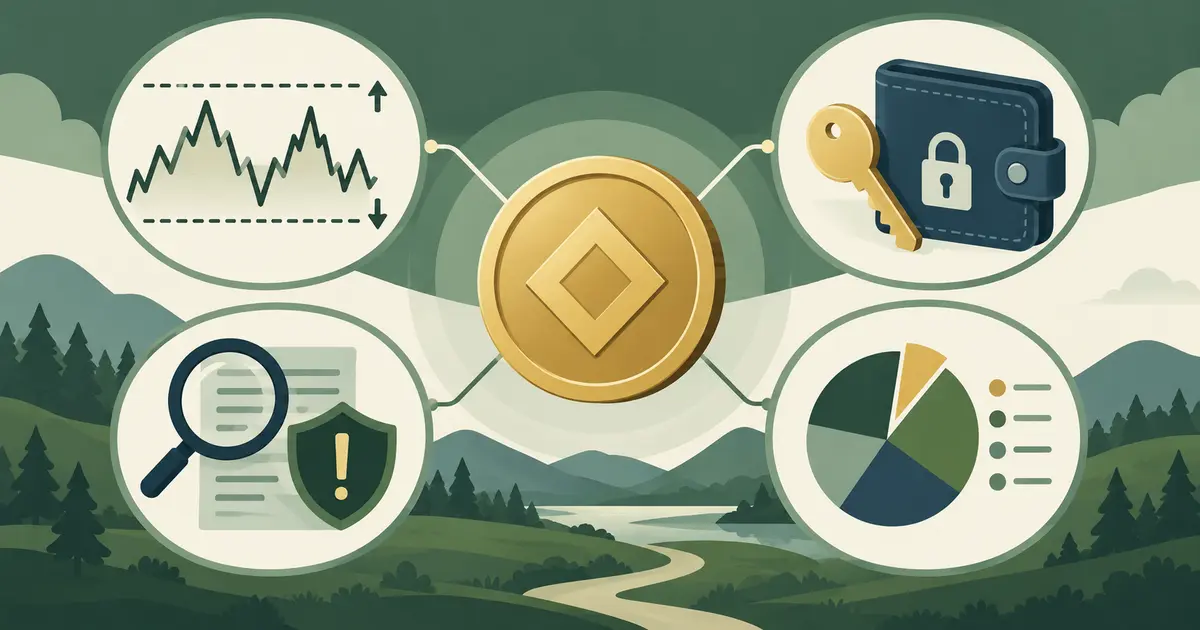
Crypto assets can move sharply, custody mistakes can be irreversible, and scams frequently use crypto as the payment or investment story. Before buying anything, decide whether you can afford a complete loss and whether you understand who controls the private keys. Review the Saving and Investing guide before deciding where crypto fits, if anywhere, in your money plan.
What is a crypto asset?
Investor.gov describes crypto assets as assets generated, issued or transferred using blockchain or similar distributed-ledger technology. The category includes assets commonly called tokens, digital assets, virtual currencies and coins. Different assets can have very different purposes, rights and risks.
Owning a crypto asset is not the same as owning a share of a profitable company or an insured bank deposit. Some assets may have little or no claim on cash flow, physical property or a legal promise of repayment.
Start with five risk checks
Custody: who controls the keys?
Investor.gov explains that a crypto wallet generally stores the private keys used to access crypto assets rather than storing the assets themselves. Losing a private key can mean losing access. Sharing a private key or seed phrase can give someone else control.
| Custody setup | Main responsibility | Questions to ask |
|---|---|---|
| Third-party custody | A platform or custodian controls the keys for assets held on your behalf. | Can withdrawals be paused? What happens if the company fails? How are customer assets recorded and protected? What security and recovery controls exist? |
| Self-custody | You control the keys. | How will you secure the seed phrase? What is the recovery plan after device loss, damage or death? Can another person access the backup? |
Neither setup removes risk. Third-party custody adds counterparty and operational risk. Self-custody moves more security and recovery responsibility to you.
Do not treat a trading app as proof that an asset is safe
An easy purchase screen does not establish the quality of an investment. Before buying, identify the asset, issuer or development group when applicable, custody terms, trading venue, fees, withdrawal rules and the legal entity holding your account.
Check whether a person recommending investments is registered through Investor.gov’s professional lookup resources when registration applies. A social-media profile, messaging-app group, celebrity name or polished dashboard is not verification.
Common crypto scam patterns
The Federal Trade Commission reported more than $7.9 billion in reported investment-scam losses in 2025 across investment scams, with a median individual reported loss above $10,000. The FTC warns that scammers often use social media, messaging apps and relationship-building tactics, then show fake account gains or demand more deposits.
- Guaranteed or unusually steady returns
- Pressure to move money quickly
- A stranger, new friend or romantic interest offering investment coaching
- A fake trading dashboard showing gains you cannot withdraw
- Requests to pay a fee, tax or deposit before withdrawing supposed profits
- Instructions to buy crypto and send it to a wallet controlled by someone else
- Promises that risk disclosures do not matter
Should you dollar-cost average into crypto?
Making equal purchases on a schedule can reduce the chance that one purchase happens at a single high price, but it does not make a bad asset safe, prevent losses or guarantee profit. A falling asset can keep falling while scheduled purchases continue.
If you use a scheduled-buy approach, decide the maximum total exposure first. The rule should limit risk, not become an automatic reason to keep adding money.
What about hardware wallets?
A hardware wallet can keep private keys away from an internet-connected computer during normal use, but it does not remove human error. A fake device, compromised recovery phrase, phishing message, malicious transaction approval or lost backup can still cause loss.
Do not buy security equipment because an influencer says one brand is required. Read the manufacturer’s security and recovery documentation, verify the device source and understand the backup process before moving assets.
A safer decision sequence
- Protect essential bills and emergency savings.
- Review high-cost debt and near-term goals.
- Set a maximum amount you could lose without damaging those priorities.
- Understand the asset and the custody model.
- Verify the platform and people involved.
- Write down fees, withdrawal rules and tax-record needs.
- Use strong unique passwords and multifactor authentication for accounts.
- Never share a seed phrase, private key or verification code.
- Keep records of purchases, sales, transfers and fees.
- Recheck whether the position still fits your plan instead of adding money because of hype or fear.
For the broader investing framework, use Investing Money. For concentration and overlap, see Diversification in Investing. For investment-loss capacity, use the Investment Risk guide.
Frequently asked questions
Is crypto a good investment?
No answer fits every person or asset. Crypto can carry high price, custody, fraud, operational and regulatory risk. Judge any position against your goals, loss capacity, time horizon and the asset’s own facts.
Can I lose all my money in crypto?
Yes. A crypto asset can lose most or all of its market value, and theft, lost keys, scams or platform failure can also cause loss.
Are crypto exchanges insured like banks?
Do not assume so. Bank deposit insurance rules do not make crypto market values insured. If a platform offers a cash balance or another product, check the exact legal entity, account type and protection that applies to that product.
Should I use more than one crypto platform?
Opening several accounts does not automatically reduce risk. It can add passwords, recovery paths, fees and records to manage. Choose custody based on the risks you understand rather than collecting platforms or sign-up offers.
What should I do if someone says my crypto profits are locked?
Do not send another payment just because someone says a fee or tax is required to release profits. Preserve the evidence and report suspected fraud through the appropriate platform, law-enforcement channel and ReportFraud.ftc.gov.
Sources
- Investor.gov: Crypto Asset Custody Basics for Retail Investors
- Investor.gov: Crypto Assets
- FTC: Spot and Avoid Investment Scams
- FTC: Investment Scams
Educational information only, not investment, tax or legal advice. Crypto assets can lose value, custody can fail, and tax or regulatory treatment can change. Verify current rules and facts before acting.