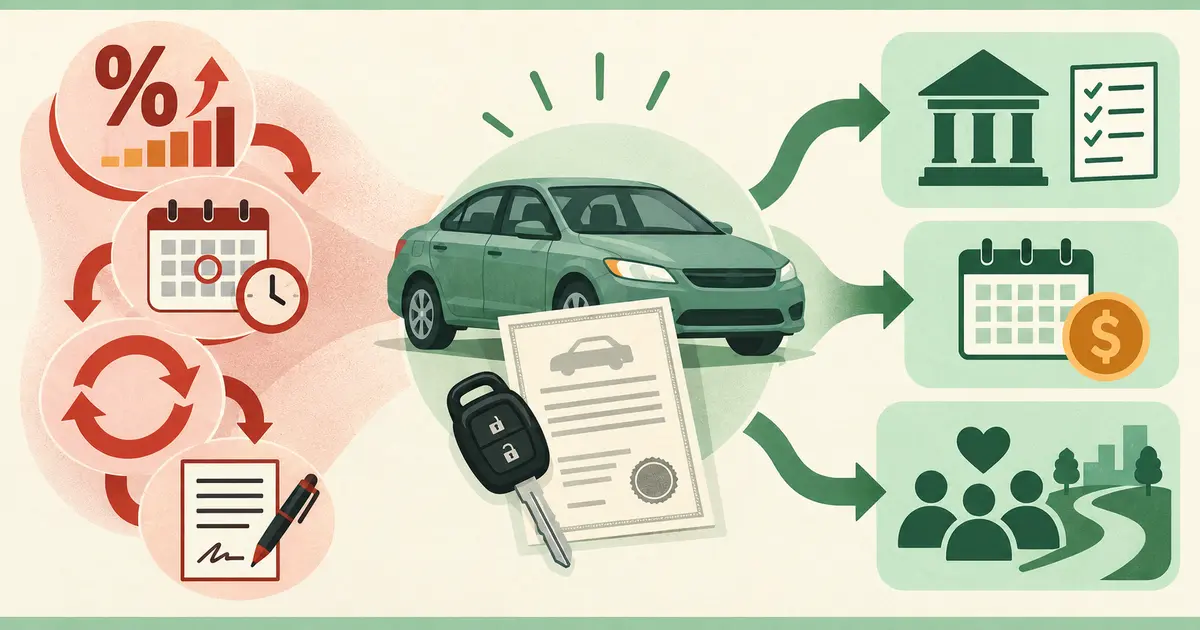
Car title loans are short-term loans secured by a vehicle title. They can supply cash quickly, but the combination of a brief repayment period, high borrowing costs, repeated renewals, and possible vehicle seizure can turn one cash shortage into a larger crisis. Compare the written total cost with safer title loan alternatives before signing or renewing.
What is a car title loan?
A car title loan is a small-dollar loan that uses a car, truck, or motorcycle as collateral. The lender generally records or holds an interest in the vehicle title while the borrower keeps driving the vehicle. Eligibility, loan size, payment schedule, and documentation depend on the lender, the vehicle, the contract, and state law.
Some title loans require one payment after a short term. Others use installments. Do not assume every loan lasts 30 days, requires biweekly payments, or follows the same repossession process.
The Consumer Financial Protection Bureau studied nearly 3.5 million single-payment auto title loan records from nonbank lenders covering 2010 through 2013. Its findings described frequent reborrowing and found that one in five borrowers in the study had a vehicle seized. Those results apply to the single-payment loans studied, not every title loan or every borrower.
How car title loans work
- The lender values the vehicle. The offer may be based partly on the vehicle’s value and any existing lien, but policies differ.
- The borrower receives disclosures and a contract. Review the amount financed, finance charge, APR, payment schedule, late charges, optional products, renewal terms, default terms, and collateral rights.
- The lender obtains a security interest. The method depends on the contract and state rules. Giving the lender a title document is not the only possible method.
- The borrower repays under the written schedule. A single-payment loan and an installment title loan create different cash-flow risks.
- The lender releases its interest after payoff. Ask how and when the lien release or title return will be handled, then keep written proof that the balance is zero.
How much can a title loan cost?
Never compare title loans by the amount of cash received alone. The four figures that matter most are the amount financed, finance charge, APR, and total of payments. Fees for late payments, returned payments, renewals, optional products, or other contract items may raise the cost.
| Hypothetical 30-day loan | Amount |
|---|---|
| Cash borrowed | $1,000 |
| Finance charge equal to 25% of the amount borrowed | $250 |
| Amount due after 30 days, before other charges | $1,250 |
| Simple annualized rate for this example | About 304% |
This illustration shows why a 25% finance charge is not the same as a 25% annual percentage rate. The actual APR and payment amount must come from the lender’s written disclosures. Ask what a renewal, extension, or missed payment would add in dollars.
Main risks to check before signing
- Vehicle loss: Default may expose the vehicle to seizure, subject to the contract and applicable law. Losing transportation can also threaten work, medical care, school, and family responsibilities.
- Repeat borrowing: A payment that consumes too much of the next paycheck can cause another shortage and lead to renewal or reborrowing.
- Unclear total cost: A small-looking fee can be expensive when attached to a short repayment period.
- Account withdrawals: Review any authorization for electronic withdrawals, the payment dates, and the contract’s process for changing payment instructions.
- Add-on products: Ask whether any membership, roadside service, insurance product, or other charge is optional and how removing it affects the loan.
- Disputed lender identity: Record the creditor’s legal name, servicer, payment address, and state license information shown in the documents.
Questions to ask the lender
- What are the amount financed, finance charge, APR, and total of payments?
- Is this a single-payment or installment loan?
- What is every due date and payment amount?
- What charges can apply after a late or returned payment?
- Can the loan be renewed or extended, and what would that cost?
- What event places the account in default?
- What does the contract say about notices and the vehicle?
- When will the lien be released or title returned after full payment?
- How do I submit a payment, dispute, complaint, or written request?
What to compare before taking a title loan
Start with the bill or emergency that created the shortage. Asking the original creditor for a due-date change, hardship plan, fee waiver, or partial-payment arrangement may cost less than borrowing against a vehicle.
Other routes may include a small-dollar loan from a credit union or community bank, local assistance for a separate essential expense, an employer or benefit program, a written loan from someone you trust, or selling an item that is not essential for work or safety. Approval and timing are never guaranteed. Compare total dollars paid, repayment time, collateral, fees, and funding date.
If a title loan already exists, use MoneyBucket’s Title Loan Escape Plan to request a written payoff quote, document the account, compare exit costs, and confirm the lien release or title return.
If you cannot make the payment
- Contact the lender promptly and request the current account status, payoff amount, deadline, and available arrangements in writing.
- Save the contract, disclosures, receipts, statements, notices, emails, text messages, and call notes.
- Do not rely on an oral extension or repossession promise. Ask for written confirmation.
- Use the USA.gov state consumer office directory to locate the state office that can route a complaint or regulator question.
- Use the Legal Services Corporation directory to search for local civil legal aid.
- Submit a complaint through the Consumer Financial Protection Bureau when the issue involves a financial product or company.
Frequently asked questions
Can a title lender take my car?
A vehicle secures the loan, so default can put it at risk. The contract and applicable law control the process, notices, timing, and available rights. Get local legal help quickly if seizure has been threatened.
Do I need good credit for a title loan?
Lenders may focus heavily on the vehicle and ability to repay, but qualification standards differ. A title loan is not guaranteed, and weak credit does not make a high-cost loan safe or affordable.
Are car title loans legal in every state?
No single rule applies nationwide. State laws and product structures differ. Confirm current rules with the appropriate state regulator or a qualified local attorney rather than relying on a general list.
Is a 25% title-loan charge the same as 25% APR?
No. A charge equal to 25% of the amount borrowed for a 30-day loan is far more expensive than a 25% annual rate. Read the written APR and total-payment disclosures.
Should I renew a title loan?
First request the new payoff amount, added charges, new due date, and total amount that would be paid. A renewal can delay the due date while increasing the cost and keeping the vehicle exposed.
Source check: Consumer Financial Protection Bureau, Federal Trade Commission, USA.gov, and Legal Services Corporation. Reviewed September 8, 2026 by the Money Bucket Editorial Team.