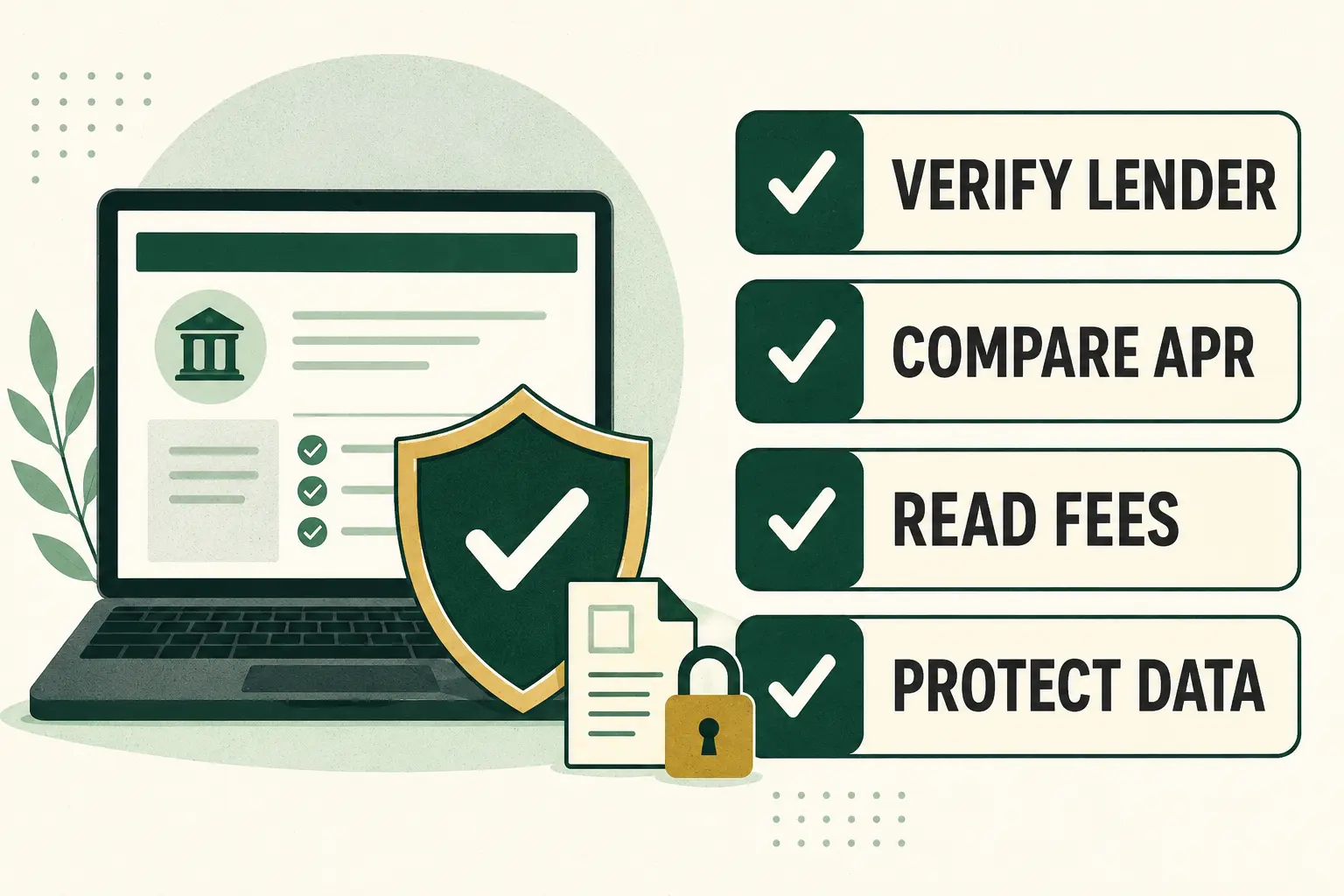
An online application is only a way to request credit. Before you share financial data, confirm the company behind the site, compare the full cost and make sure the payment schedule fits your debt-management plan.
Online loans are a channel label, not one loan type
Online loans can be personal installment loans, lines of credit, payday loans, title loans or other forms of credit. The application may look similar across sites, yet the cost, payment structure, collateral rules and consumer protections can differ sharply.
Start by naming the product. Ask whether payments reduce the principal on a set schedule, whether the rate can change, whether collateral secures the debt and what happens after a missed payment. A fast application does not make the debt low-cost or low-risk.
Find out who receives the application
Lender
A lender makes the credit decision and provides the money. Its disclosures should name the legal company, show the credit terms and explain how to contact it.
Lead generator or marketplace
A lead generator collects an application and sends it to one or more companies. Read the privacy notice before entering data. Look for language about marketing partners, affiliates, matching services or consent to calls and texts. The name on the website may not be the name of the eventual lender.
Compare APR, fees and total repayment
Do not compare offers by payment alone. A smaller payment can come from a longer term and can raise the total repaid. Review the disclosures and put each offer in the same table.
The Consumer Financial Protection Bureau explains how APR supports loan-cost comparisons, including short-term loans whose dollar fee may hide a very high annualized rate.
| Item | Question to answer | Why it matters |
|---|---|---|
| APR | What annual percentage rate appears in the disclosure? | APR combines interest with certain finance charges for a more useful cost comparison. |
| Fees | Are there origination, monthly, late or returned-payment fees? | Fees can raise the amount paid or reduce the cash received. |
| Net proceeds | How much money reaches you after deductions? | The loan amount can be larger than the usable cash. |
| Schedule | What is each payment, how often is it due and when does repayment end? | Weekly or biweekly withdrawals can strain a monthly budget. |
| Total repayment | What is the total of all scheduled payments? | This is the clearest bottom-line cash comparison when payments are made as agreed. |
Place the payment dates beside rent, utilities, food and other debt payments in your budget. If the schedule leaves a recurring gap, the loan may shift the problem to the next pay period.
Treat high-cost short-term credit with care
Payday and similar short-term loans can carry a very high APR even when the fee looks small in dollars. A short term makes the annualized rate much larger. Repeated renewals or reborrowing can add more fees before the original need is resolved.
For an urgent bill, ask the provider about a payment plan, contact creditors before the due date, review local assistance and compare credit-union or community options. A starter emergency fund can reduce future reliance on short-term debt. Check the timing and full cost of each option.
Recognize advance-fee loan scams
Do not trust caller ID, a copied government seal or a message that creates artificial urgency. Contact the company through an independently verified website or phone number. The FTC’s advance-fee loan warning explains that no legitimate company will say a payment guarantees a loan.
Control bank access and protect personal data
Read the ACH authorization
An ACH authorization can permit electronic withdrawals from a checking account. Before signing, identify the withdrawal amount, first date, frequency, treatment of variable payments and the steps for revoking authorization. Keep a copy of the agreement and watch the account.
The CFPB says consumers can revoke an automatic-payment authorization or request a stop-payment order, subject to timing and fee rules. Stopping an automatic withdrawal does not cancel the debt or the duty to pay by another agreed method.
Share less data
Check the site’s privacy and sharing terms before entering a Social Security number, bank credentials or employment details. Leave if the domain is misspelled, the connection warning appears or the form arrived through an unexpected message. The FTC advises contacting a company through a website or number you already know is real, not through an unexpected link. Review MoneyBucket’s identity-theft protection guide. If information has already been exposed, use the steps in Hacked Now.
Online-loan checklist
- Write down the product type and lender’s legal name.
- Confirm whether the site is the lender, a marketplace or a lead generator.
- Check the company with the appropriate state regulator using an independent source.
- Compare APR, fees, net proceeds, payment frequency, term and total repayment.
- Test every payment date against the household budget.
- Read the privacy notice, marketing consent and ACH authorization.
- Reject any demand for an up-front payment to secure promised approval.
- Save the application, disclosures, agreement and customer-service details.
Frequently asked questions
Are online loans cheaper than bank or credit-union loans?
Not necessarily. Online describes the application channel, not the price. Compare APR, fees, net proceeds, payment schedule and total repayment across offers.
Are online loans easier to get with bad credit?
Approval rules vary by lender and product. Easier approval can come with higher cost or added risk, so check the full terms and avoid any company that guarantees approval for an advance payment.
Is it safe to enter my bank information online?
Only after independently verifying the company, checking the domain and connection, and reading how the site will use and share the data. Do not enter bank credentials through an unexpected link or message.
Should payday loans be used for emergencies?
Check lower-cost options first. Payday loans can have very high APRs and short repayment periods, and reborrowing can add fees. Compare a provider payment plan, creditor hardship help and local assistance.
How can I tell if a loan website is a lender or lead generator?
Read the disclosures and privacy notice for the legal company name and phrases about matching, marketing partners or sharing an application. Confirm the eventual lender before accepting any offer.
Can I stop automatic loan payments from my bank account?
You can revoke an ACH authorization and ask the bank or credit union about a stop-payment order. Timing and fees may apply. Stopping the withdrawal does not erase the debt, so arrange another valid payment method.
Sources and further reading
- CFPB: Comparing Loan Costs with APR
- CFPB: Stopping Automatic Loan Withdrawals
- CFPB: ACH Authorization
- FTC: Advance-Fee Loan Scams
- FTC: Phishing Scams
Educational information only. Credit costs, licensing rules and available options vary by lender and location. Review the contract and seek qualified help when needed.